Herbal stories
St John's wort – the herb with 'holes' in its leaves
Hold one of its leaves up to the light and you will see where the Latin name comes from. St John's wort is one of Europe's best-known herbs.
How to recognise St John's wort
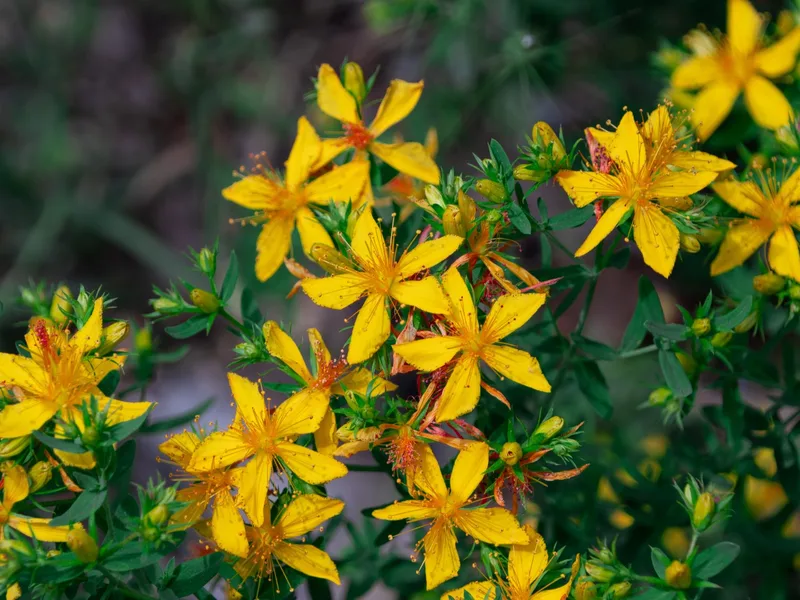
Common St John's wort (Hypericum perforatum) is a perennial growing 30–80 cm tall. Its stiff stem has two raised lines along its length, which distinguishes it from many related species. The opposite, oval leaves look "perforated" when held against the light – these are translucent oil glands. The golden-yellow flowers have five petals with black dots along the edges; when rubbed they stain your fingers red.
Where it grows
St John's wort is common throughout Europe. You will find it in dry meadows, grasslands, woodland edges, clearings, wasteland and roadsides. It likes sunny spots and free-draining soil. It flowers from June to August, most profusely around the summer solstice.
Sowing the seeds
The seeds are very fine and need light to germinate. They are sown on the surface in spring or autumn – autumn sowing mimics natural conditions well. Germination can be uneven and spread over time, so keep the soil consistently moist. In the first year the plants form mainly a rosette and usually flower abundantly from the second year.
Interesting facts
- The name comes from its flowering around St John's Day on 24 June.
- The red pigment in the flowers is hypericin, which earned the plant the old nickname "St John's blood".
- St John's wort can increase the skin's sensitivity to sunlight and interact with some medicines – always talk to a doctor or pharmacist before using it.
- In many European countries it is grown on plantations for the herbal industry.
St John's wort on the plantation and in nature
For herbal use, the flowering tops of the shoots are harvested, ideally on sunny days when the flowers are fully open. The material is dried in the shade in a well-ventilated place so that it keeps its colour. Field cultivation requires weeding in the first year; after that the plant suppresses competition well and can be harvested for several seasons.
In nature, St John's wort is an important part of warm grasslands and dry meadows. Its flowers produce no nectar but plenty of pollen, and are eagerly visited by honeybees, bumblebees and hoverflies.
St John's wort seeds are in our catalogue. Ask us about timing and quantities.
This information is general and educational. It does not replace advice from a doctor or pharmacist – consult a specialist before using herbs for health purposes.

