Herbal stories
Dandelion – the weed that became a crop
Everyone knows its yellow flowers and fluffy seed heads. Few people know that dandelion is grown in fields like any other herb – and we do it on a large scale.
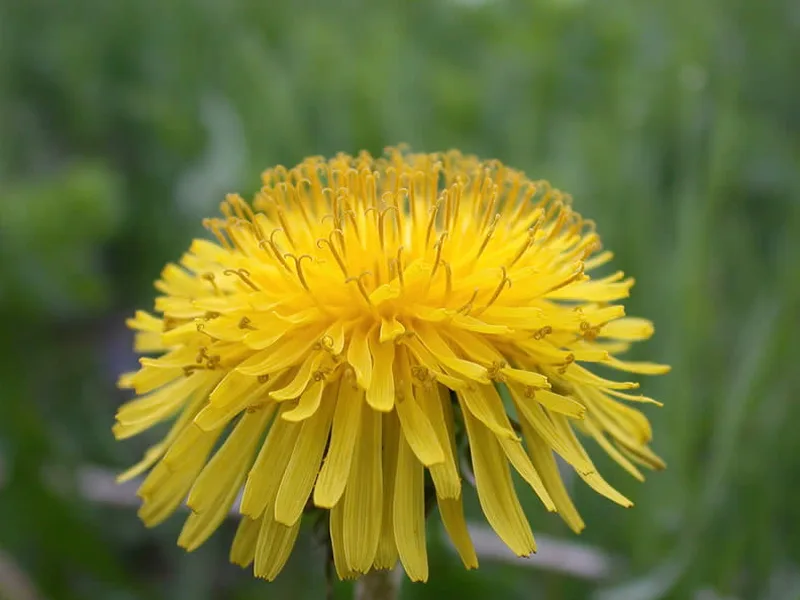
How to recognise dandelion
Dandelion (Taraxacum officinale) is a perennial of the daisy family. It forms a ground-level rosette of deeply toothed leaves – the teeth resemble a lion's teeth, hence the French name dent de lion. Hollow, leafless stems rise from the rosette, each topped with a single golden flower head. After flowering it turns into the familiar round "clock" made of hundreds of seeds, each with a parachute of fine hairs. The whole plant contains a bitter, white milky sap.
Where it grows
Dandelion is one of the most common plants in Europe. It grows in meadows, pastures, lawns, roadsides and gardens, from lowlands to mountains. It prefers fertile, nitrogen-rich soil and copes well with mowing. It flowers most abundantly in April and May, with single flower heads appearing until autumn.
Growing from seed
Dandelion seeds are small and need light to germinate, so they are sown shallowly – no deeper than 0.5 cm – into well-prepared, moist soil. Sowing takes place in spring or at the end of summer. When grown for the root, plants are usually harvested in the autumn of the first year or the spring of the second, when the roots are thick and well developed. Dandelion is undemanding, but yields best in deep, free-draining soil where the root can grow freely.
Interesting facts
- A single seed head holds up to 150–200 seeds, which the wind can carry for many kilometres.
- Dandelion flowers open in the morning and close in the evening and in cloudy weather.
- In spring, dandelion is one of the first abundant sources of pollen and nectar for bees.
- Young leaves have been eaten as salad for centuries, and the flowers are used to make dandelion "honey" syrup.
Dandelion in the kitchen and in tradition
Old herbals described dandelion as a "spring plant": young leaves went into salads and soups, the flowers into syrups, and the roasted root served as a coffee substitute. The bitterness of the leaves is milder if they are picked before flowering or if the plants are covered for a few days before harvest, as with chicory. The root is usually harvested in autumn, when it has stored the most reserve substances, including inulin.
On a plantation, the right sowing density, weeding in the first weeks after emergence and careful harvesting all matter – the roots must be dug out whole, washed and dried quickly to keep the raw material in good condition.
At HS Farm we grow dandelion on a large scale. Interested in dandelion root in wholesale quantities or in the seeds? Get in touch.
This information is general and educational. It does not replace advice from a doctor or pharmacist – consult a specialist before using herbs for health purposes.

