Herbal stories
Yarrow – a thousand leaves in the meadow
In summer, yarrow's white flower heads line every road. It is one of the toughest meadow plants and a staple of wildflower seed mixes.
How to recognise yarrow
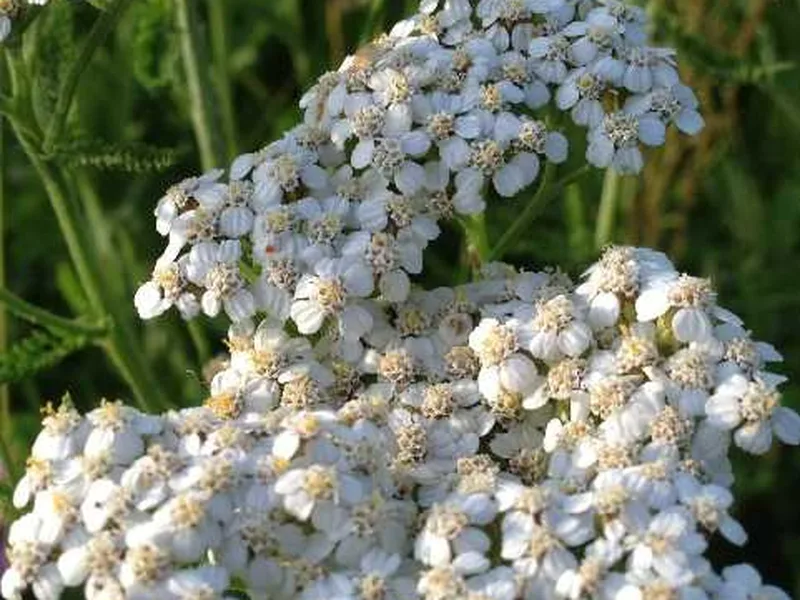
Yarrow (Achillea millefolium) is a perennial of the daisy family, growing 20–80 cm tall. Its leaves are finely divided many times into hundreds of narrow segments – hence the Latin name millefolium, "a thousand leaves". The small flower heads, white or pinkish, are gathered in flat, dense clusters. When crushed, the plant releases a distinctive, spicy and slightly bitter scent.
Where it grows
Yarrow occurs across almost all of Europe. It grows in dry and moist meadows, pastures, field margins, roadsides and embankments. It tolerates drought, poor soil and trampling, and spreads by runners into dense patches. It flowers for a long time – from June to October.
Sowing the seeds
Yarrow seeds are very fine and need light to germinate, so they are sown on the surface and only pressed lightly into the soil. The best time is spring or early autumn. In warm, moist soil seedlings appear after 1–2 weeks. Yarrow works well in wildflower meadow mixes and on dry slopes, where it binds the soil and attracts pollinators.
Interesting facts
- The genus name Achillea refers to the Greek hero Achilles, who according to legend used yarrow to dress soldiers' wounds.
- Old English names such as "soldier's woundwort" and "nosebleed" come from the same tradition.
- The flat flower clusters are a landing pad for many insects, including hoverflies and small beetles.
- Yarrow is one of the species most widely used to create wildflower meadows in Europe.
Yarrow in the garden and the wildflower meadow
Yarrow is a forgiving plant. It grows on sandy and clay soils, in full sun or light shade, and needs no feeding or watering once established. In a wildflower meadow it pairs well with brown knapweed, ox-eye daisy, meadow clary and clovers, forming a long-flowering, drought-tolerant mosaic.
Yarrow copes well with mowing: cut in midsummer, it regrows quickly and flowers again in autumn. Its leaves are sometimes added to compost as an activator, and the dried flower heads are popular in bouquets.
You will find yarrow seeds in our catalogue – ask us about availability and larger lots.
This information is general and educational. It does not replace advice from a doctor or pharmacist – consult a specialist before using herbs for health purposes.

